Pallet Storage System Types: The Complete Guide to Sizing & Costs (Ireland)
A pallet storage system is a structured solution used to organise, store and manage palletised goods efficiently. Businesses can choose from different pallet storage systems depending on available space, stock levels, accessibility requirements and budget. The main types are selective pallet racking, double-deep racking, drive-in racking, push-back racking, pallet flow (gravity) racking and floor block stacking. This guide compares each type on space per pallet, cost and access, and explains when outsourcing to a 3PL is cheaper.
Choosing the wrong pallet storage system is an expensive mistake. Opt for a low-density solution when you actually need high density, or vice versa, and you will either waste floor space or find your pallets difficult to access. This page compares pallet storage options with data benchmarks relevant to Irish warehouse conditions.
What Is a Pallet Storage System?
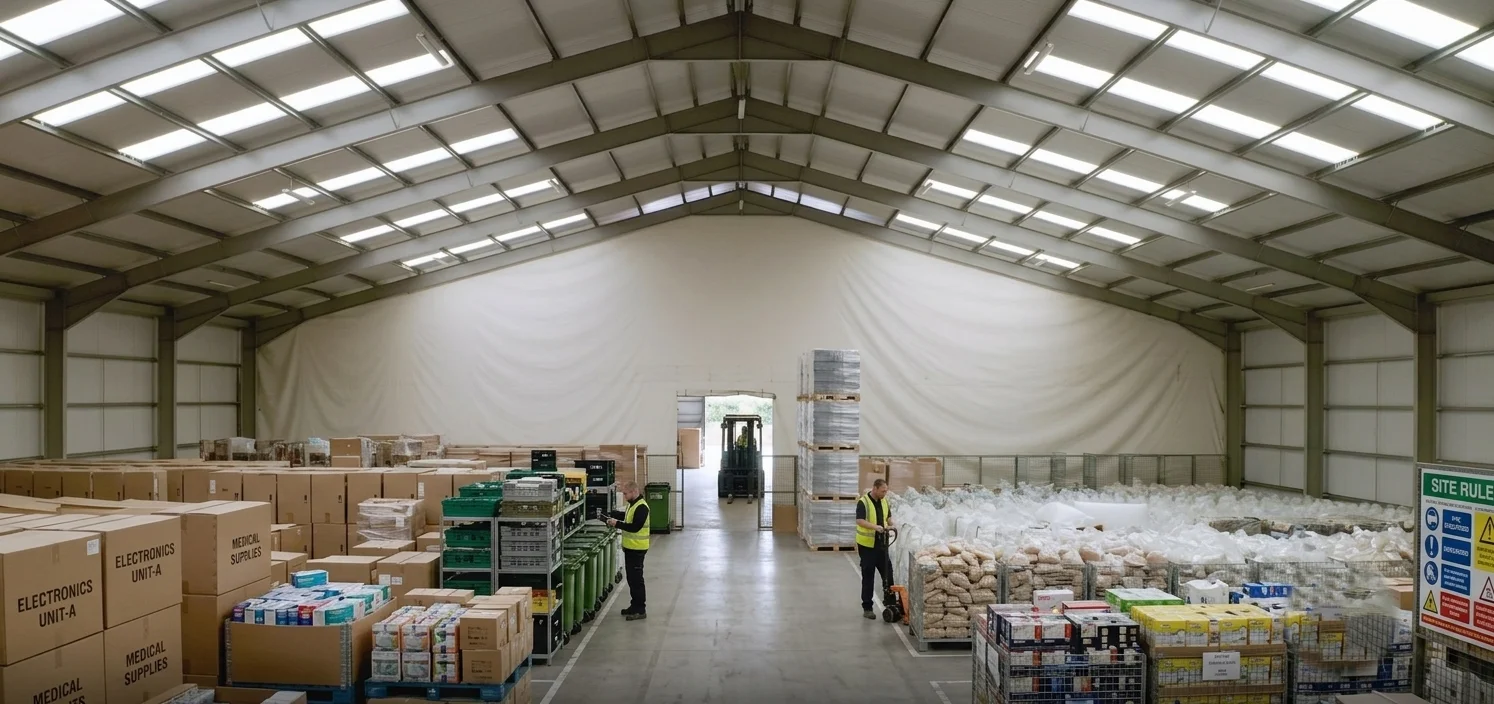
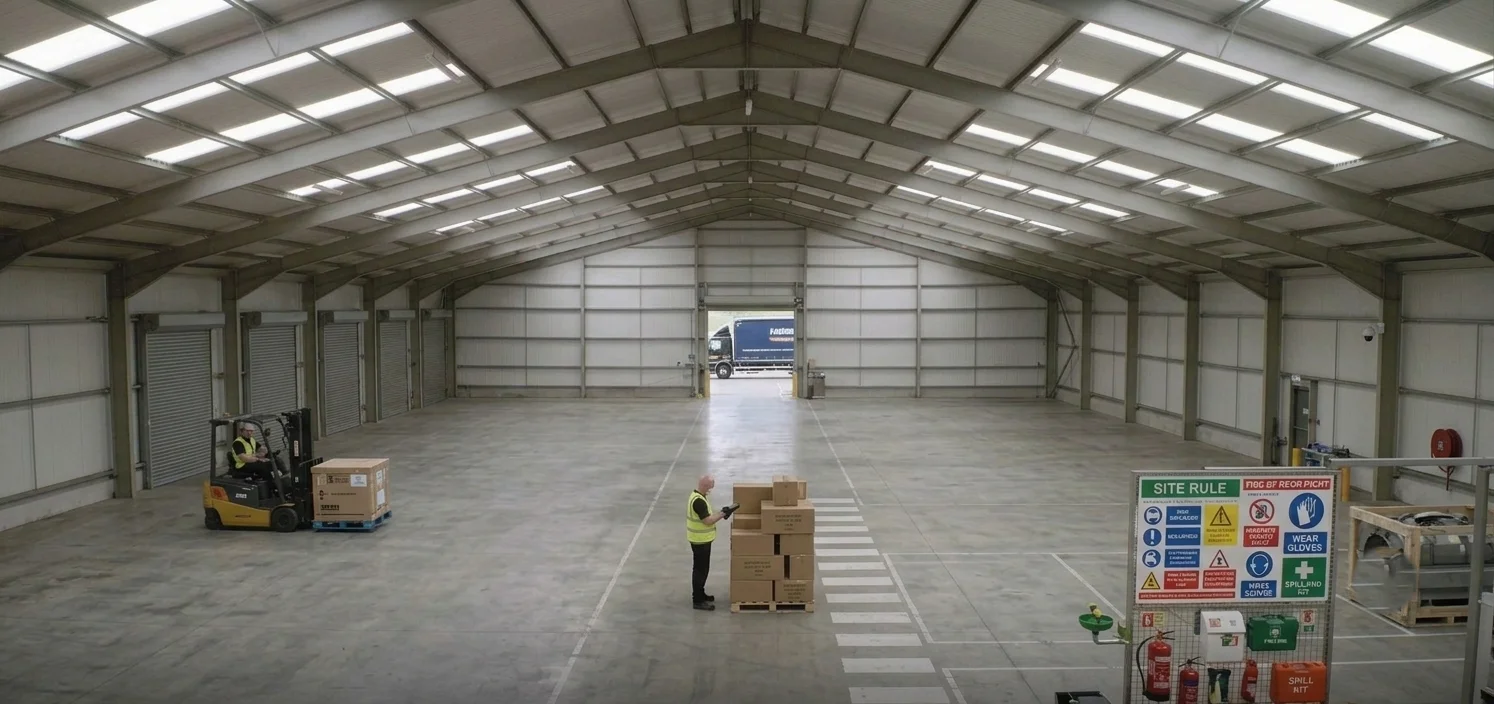
A pallet storage system, also called palletised storage, is any structured arrangement used to store palletised goods in a warehouse or logistics facility. It defines how pallets are organised, accessed, and moved. Options range from installing your own warehouse infrastructure to outsourcing storage entirely to a managed 3PL facility, which suits businesses that do not want to invest in their own premises or equipment.
The choice of system affects your storage density (how many pallets fit), access speed (how quickly you can retrieve a specific pallet), operational cost, and capital requirement. Every pallet storage system combines the same core components, including warehouse safety.
| Component | Description |
|---|---|
| Storage structure | The physical infrastructure holding pallets, or none at all if storage is outsourced |
| Aisle layout | How space is divided between storage and forklift movement lanes |
| Access pattern | FIFO (first in, first out) or LIFO (last in, first out), depending on the setup |
| Handling equipment | Forklifts, reach trucks, pallet jacks; must match the storage layout |
| WMS / stock control | Software tracking pallet locations, movements, and stock levels |
Types of Pallet Storage System
There are six main types of pallet storage system used in Irish warehouses. Each trades direct access to pallets against how many pallets fit in the same floor space. The table compares them at a glance; each type is explained below.
| Pallet storage system | Stock rotation | Best for |
|---|---|---|
| Selective pallet racking | FIFO or LIFO | Many products, frequent picking |
| Double-deep racking | LIFO | Two or more pallets per product |
| Drive-in racking | LIFO | Bulk stock, few products, cold stores |
| Push-back racking | LIFO | Medium volume per product |
| Pallet flow (gravity) racking | Automatic FIFO | Food and date-coded goods |
| Floor block stacking | LIFO | Batch stock, LIFO acceptable |
Selective pallet racking
The most common pallet storage system in Ireland. Every pallet sits on its own beam level with direct forklift access, so any pallet can be picked without moving another. It uses the most floor space because of the aisles, but suits businesses with many products and frequent picking.
Double-deep racking
Pallets are stored two deep on each side of the aisle, with fewer aisles than selective racking. Only the front pallet is directly accessible and a reach truck with extending forks is needed. Best when you hold at least two pallets of each product.
Drive-in racking
A high-density system where forklifts drive into the racking lanes and place pallets on rails. The last pallet in is the first out (LIFO), so it suits bulk stock with few product lines and cold stores where space is expensive.
Push-back racking
Pallets sit on nested carts on a slight slope, several pallets deep. Loading a new pallet pushes the others back; removing the front one lets the next roll forward. Denser than selective racking with easier access than drive-in.
Pallet flow (gravity) racking
Pallets are loaded at the back and roll forward on inclined rollers to the picking face, giving automatic first in, first out rotation. The preferred pallet storage system for food, drink and other date-coded goods.
Floor block stacking
Pallets are stacked up to three high directly on the floor with no racking. It is the lowest-cost, highest-density option, but only the front row is accessible and goods must be strong enough to carry the weight above.
Which Pallet Storage System Is Right for My Business?
| Your Situation | Recommended Approach |
|---|---|
| High SKU count, regular picking | Selective pallet racking |
| Multiple pallets per SKU, LIFO acceptable | Double-deep or push-back racking |
| Bulk storage, very few SKUs | Drive-in racking or block stacking |
| Date-sensitive products, auto FIFO needed | Pallet flow (gravity) racking |
| Overflow or temporary storage | Flexible short-term storage |
| Don't want capital investment | Outsource to managed 3PL facility |
Building Checks Before Installing a Pallet Storage System
The table above matches a system to your stock. Before you order racking, your building also needs to pass three checks:
- Clear height: the usable height under the roof, lights and sprinklers sets how many beam levels each bay can hold.
- Floor strength: loaded racking puts heavy point loads on the floor slab, so confirm the slab can carry them, especially for taller or high-density layouts.
- Fire safety: check sprinkler and fire-safety requirements with your fire consultant and insurer before you finalise the layout.
Original Data: Pallet Storage Benchmarks (Ireland)
Based on operational data from Joe McGovern Transport's Co. Cavan warehouse and industry benchmarks for Irish 3PL facilities:
- 85 to 100% Selective pallet racking typically achieves this pallet accessibility rate; approx 7 to 10 sq ft floor space per pallet position including aisle
- 20 to 30% Drive-in racking accessibility without clearing a lane; approx 4 to 5 sq ft per pallet position
- 3 to 4 sq ft Floor block stacking (3 high) per pallet position; front-row access only
- Weekly terms Outsourced 3PL managed storage at Joe McGovern Transport, Co. Cavan, billed per pallet per week
- Per pallet, per week How managed pallet storage is charged at Irish 3PL facilities
- 20 to 150 pallets Typical Irish SME pallet stock in active rotation
- Sizing example Using the figures above, 100 pallets need about 700 to 1,000 sq ft in selective racking, 400 to 500 sq ft in drive-in racking, or 300 to 400 sq ft block-stacked three high.
Cost Comparison: Own Storage vs Outsourced 3PL
| Cost Component | Own Storage Infrastructure | Outsourced 3PL (Joe McGovern) |
|---|---|---|
| Infrastructure | Racking purchase and installation | €0, no capital required |
| Forklifts | New or used forklift purchase | €0, included in service |
| Warehouse premises | €6 to €12/sq ft/year (IE industrial) | €0, no premises needed |
| Ongoing storage cost | Premises + staff + utilities | Per pallet per week, quoted to your volume |
| Distribution | Separate haulier required | Palletxpress 32-county overnight included |
| Management | In-house staff required | Fully managed by Joe McGovern Transport |
Note: Industrial warehouse rents in Ireland vary by location. Data based on CBRE Ireland Industrial Market Outlook 2025 and JLL Ireland Industrial & Logistics Report. See our full warehouse storage costs in Ireland guide.
Pallet Storage vs Self-Storage vs 3PL
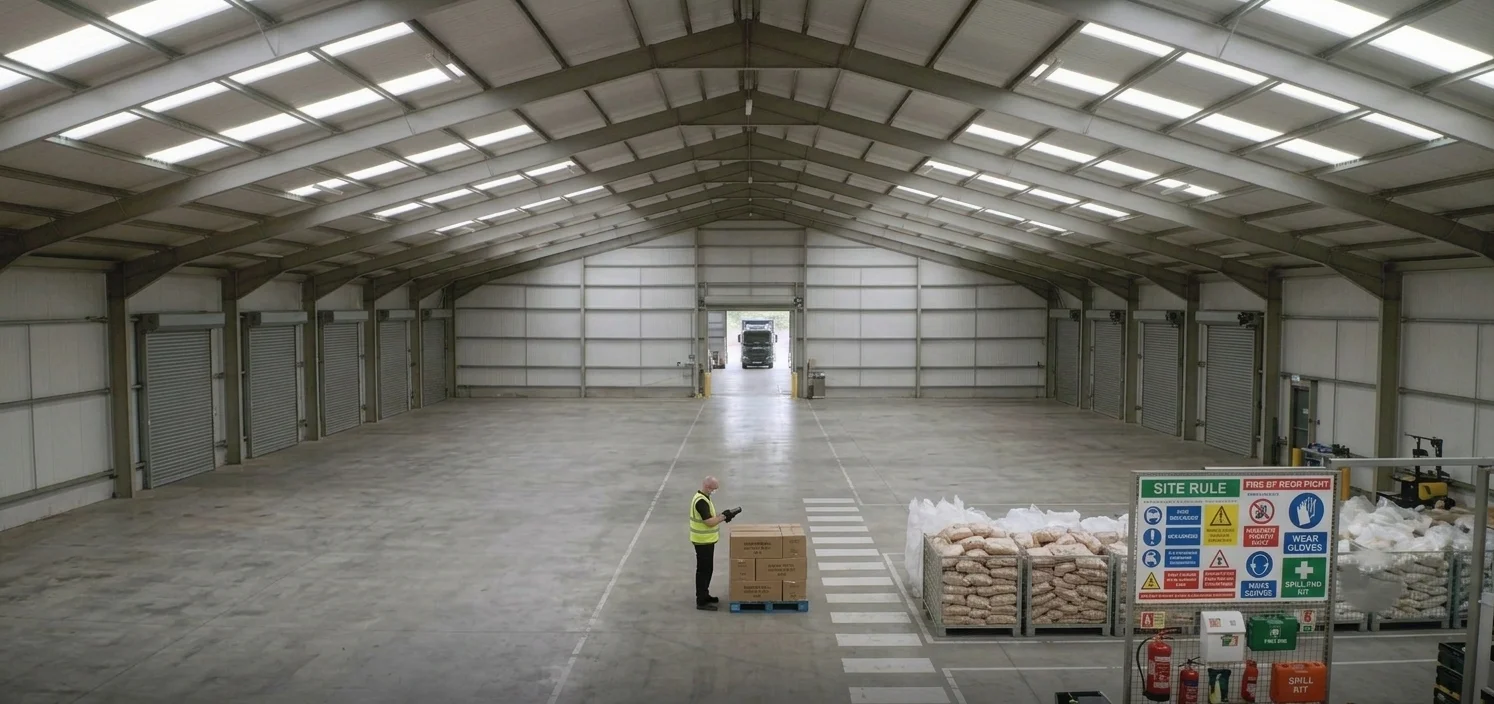
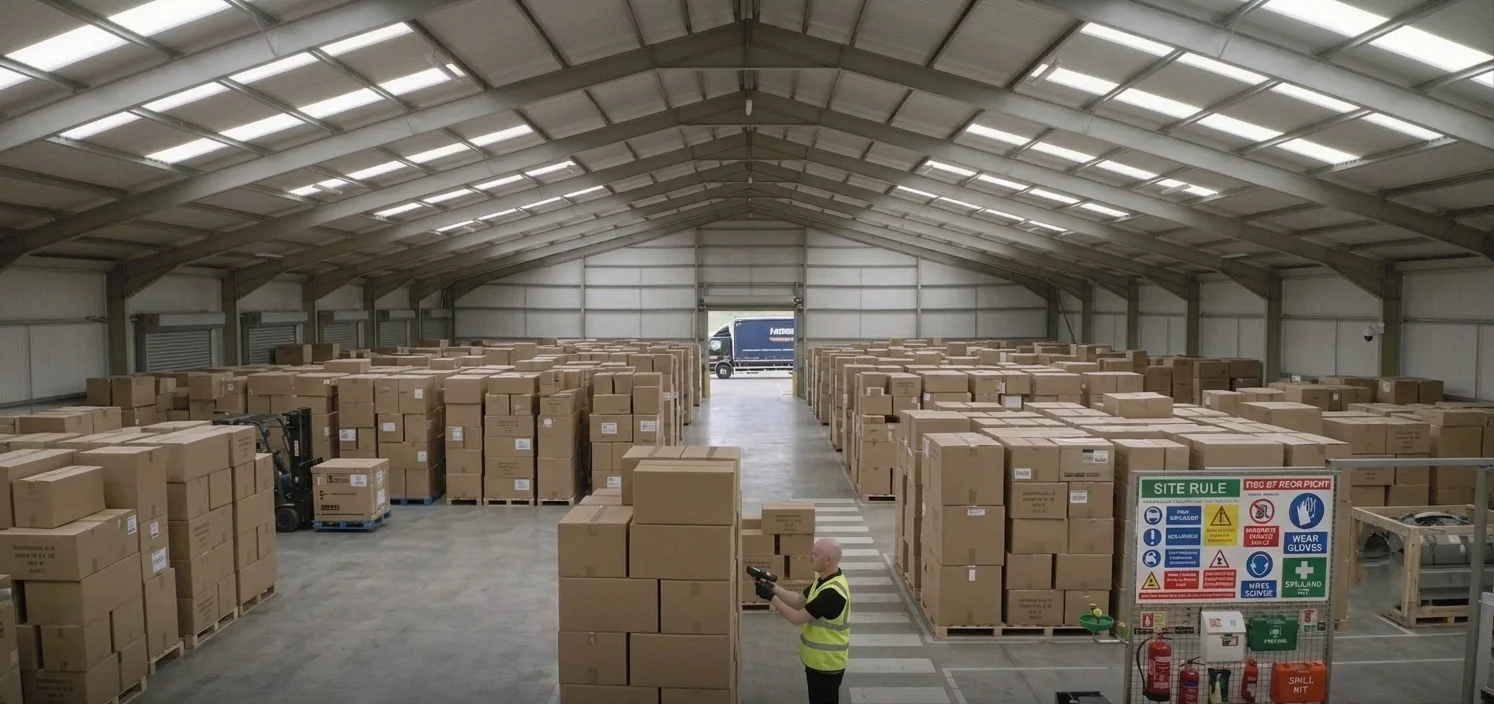
Irish businesses searching for storage encounter three categories: self-storage (lockable units, consumer-focused), standalone pallet storage (an industrial unit you run yourself), and managed 3PL warehousing (storage plus handling and distribution). Each serves a different purpose. Here is how they compare for palletised goods. See also our business storage options, or our managed storage with pallets service.
| Criteria | Self-Storage | Standalone Pallet Storage | Managed 3PL (Joe McGovern) |
|---|---|---|---|
| Pallet handling | No, manual access only | Maybe, depends on unit | Yes, electric forklifts |
| Stock management | None | Manual / self-managed | Bespoke WMS + client portal |
| Distribution | No | Separate haulier required | Palletxpress 32-county overnight |
| Container devanning | No | No | Yes, 20 ft and 40 ft |
| Food licensed | No | No | Yes, FSAI compliant |
| Contract flexibility | Monthly, fixed unit | Varies | Weekly, no lock-in |
| Scalability | Low, unit-based | Low, fixed capacity | High, scale by pallet count |
| Best for | Small consumer goods, documents, personal items | Own-ops businesses with warehouse staff | B2B goods needing storage + distribution |
Pallet Storage System Recommendations by Sector
| Sector | Recommended Approach | Reason |
|---|---|---|
| E-commerce / DTC | Selective pallet racking or 3PL outsourcing | High SKU count, frequent picks, variable volume |
| Food / FMCG | Pallet flow (gravity) racking or managed 3PL (food licensed) | Auto FIFO required for date rotation; food licensing needed |
| Cold store / frozen | Drive-in racking | Maximum density per sq ft, expensive refrigerated space |
| Importers (container) | 3PL outsourcing (devanning included) | No need for own devanning equipment or premises |
| Manufacturers (batch) | Floor block stacking or 3PL overflow | Predictable product profile, batch LIFO acceptable |
| Seasonal businesses | Outsourced 3PL (flexible terms) | Scale capacity during peak without owning permanent space |
Pallet Storage System FAQs
-
What are the main types of pallet storage system?
The main types are selective pallet racking, double-deep racking, drive-in racking, push-back racking, pallet flow (gravity) racking and floor block stacking. Selective racking gives direct access to every pallet, while drive-in racking and block stacking fit the most pallets into the least space. -
What does a pallet storage system include?
A pallet storage system covers everything used to organise, access, and move palletised goods, from the physical storage structure to the handling equipment and stock control software. It can be built in-house or provided by an outsourced managed facility. -
What is the most common pallet storage system in Ireland?
Selective pallet racking, which offers direct access to every pallet, is the most common pallet storage system in Irish warehouses. It suits a wide range of product types and is compatible with standard forklifts. -
Can I outsource my pallet storage in Ireland?
Yes. Instead of investing in your own warehouse infrastructure, you can store your pallets in a managed 3PL facility. At Joe McGovern Transport (Co. Cavan), pallet storage comes with no long-term contract, real-time stock visibility, and integrated 32-county next-day distribution. -
What equipment is needed to operate a pallet storage system?
It depends on the system. Selective pallet racking typically uses counterbalance forklifts or reach trucks, while drive-in racking requires forklifts able to travel further into a storage lane. Outsourcing to a 3PL removes the need for you to own any handling equipment at all. -
How often should pallet racking be inspected?
In Ireland, racking inspection follows the European standard I.S. EN 15635. It calls for regular checks by trained staff and an inspection by a technically competent person at least once every 12 months. Each bay should also display a load notice showing its safe working load.
No Storage Infrastructure Budget? Outsource to Joe McGovern Transport
Managed pallet storage in Co. Cavan, priced per pallet per week. Zero capital investment. 32-county next-day distribution. Food licensed. Real-time stock portal.